
Heat Pump Not Heating? Common Faults and What They Mean (2026 Guide)
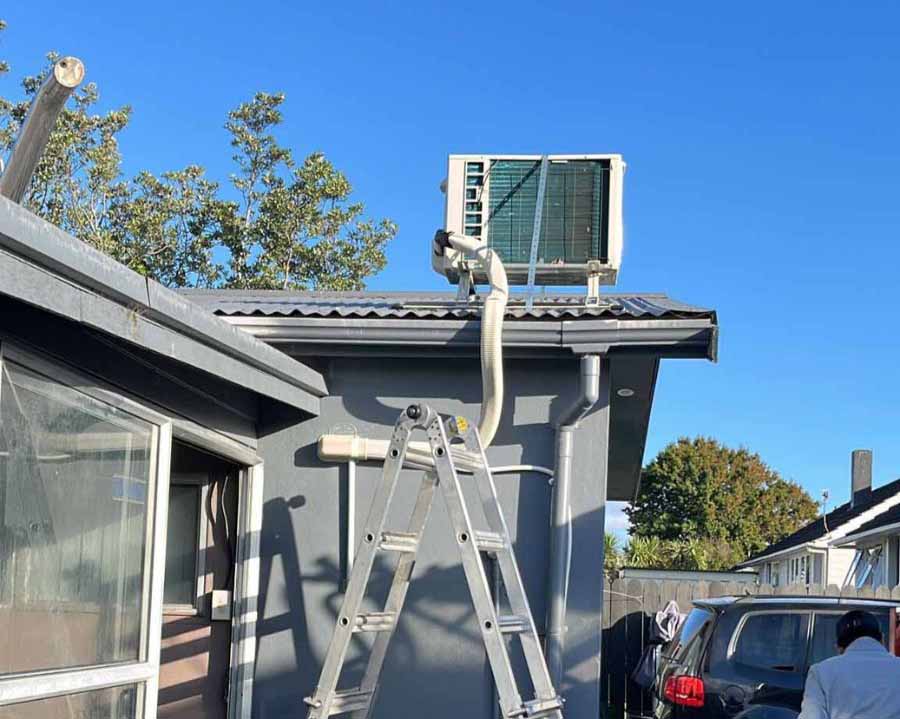
Heat pumps rarely fail in October. They fail on the first proper frost of the season, the week visitors arrive, or the day the southerly finally turns up, exactly when you need warmth most. Suddenly it’s blowing cold on heat mode, dripping water down the wall, flashing a code, or doing nothing at all. Most of these faults fall into a handful of patterns, and knowing which one you’re looking at tells you whether it’s a five-minute fix or a job for us. Here’s what each symptom usually means.
Request A free Quote Today!
The Four Checks Worth Doing Before You Call Anyone
Before you book anyone, four checks take five minutes and rule out the simplest causes.
- Check the filters. A clogged filter is behind a large share of heat pump call-outs, and a quick rinse under the tap sorts it.
- Check the isolator switch. Turn the unit off at the wall isolator for five minutes, then switch it back on. This clears a lot of minor faults and error codes on its own.
- Check the breaker. If the unit won’t turn on at all, look at your switchboard before assuming the heat pump itself has failed.
- Check the remote settings. Heat mode instead of cool, fan speed left on minimum, or a timer setting bumped by accident are more common causes than people expect.
If the fault’s still there after that, it’s time to call someone rather than keep guessing.
Common Heat Pump Faults and What They Mean
Once the easy checks are done, here’s what the usual symptoms point to.
Blowing Cold Air on Heat Mode
A short burst of cold air every so often is normal, that’s the defrost cycle clearing ice off the outdoor coil, and it should pass within a few minutes. Cold air that doesn’t stop is different, usually low refrigerant from a slow leak, a stuck reversing valve, or a failing sensor. None of those are DIY fixes. If the unit is blowing cold and staying cold, that’s when to book a repair rather than wait it out.
Water Leaking From the Indoor Unit
This is almost always a blocked condensate drain rather than anything serious. Dust, algae or a sagging drain hose stops the water draining away, and it finds the nearest gap instead. Clearing it properly means getting into the unit, which is a job for us rather than a bucket and a prayer.
Ice on the Outdoor Unit
A light frosting in cold shoulder-season weather is normal and clears on its own during the next defrost cycle. Ice that builds up and never clears points to an airflow problem or a refrigerant fault, and running the unit hard while it’s iced up only strains the compressor further.
A Flashing Light or Error Code
Note the pattern of flashes or the code shown, then isolate the unit at the wall for five minutes and restart it. If the same code comes straight back, that code is telling our technicians exactly where to look, so keep it rather than clearing it and forgetting. Don’t keep restarting it over and over hoping it sorts itself out.
New Rattles, Grinding or Gurgling
A rattle is often something loose, a panel, a bracket or a fan blade catching. Grinding usually means a bearing on its way out. Gurgling is refrigerant moving through the system, sometimes normal and sometimes a sign of a leak. None of these get better on their own, and all three are quick to diagnose in person.
Short Cycling
A unit that switches off and on every few minutes instead of running steadily is short cycling, usually down to oversizing, a refrigerant issue or a faulty sensor rather than anything fixable from the couch. It’s also hard on the compressor, so it’s worth booking a look before it turns into a bigger repair.
When It’s Not Broken, Just Filthy
A decent share of “broken” heat pumps aren’t broken at all, they’re filthy. Dust and mould build up on the filters, the indoor coil and the fan barrel where you can’t see them, and the unit slowly loses the efficiency it once had until it looks like a fault rather than neglect. If your unit hasn’t had a proper service in over a year, that’s usually the first thing worth ruling out before booking a repair.
Repair or Replace: The Maths
Not every fault is worth fixing. A unit under 10 years old with a filter, sensor or minor electrical fault is almost always worth repairing, a small cost against years of life left in the unit. A unit past 10 to 12 years old facing a major part, a compressor or a full refrigerant circuit, is a different decision. At that point a repair can cost close to half of a new unit, and a new heat pump comes with a fresh 5 to 10 year warranty rather than a patched-up one with no guarantee against the next fault. We install heat pumps from $1,750 including GST, and you can see the full price breakdown in our heat pump cost guide if replacement is looking like the better option. We compare both numbers honestly rather than pushing a repair just to book the job.
Heat Pump Repair FAQs
Why Is My Heat Pump Not Heating Properly?
Usually a dirty filter or coil, which is the most common cause by far. After that it’s low refrigerant, a failing sensor or a stuck reversing valve, none of which are safe or practical to fix yourself.
Why Is My Heat Pump Blowing Cold Air on Heat Mode?
A short cold burst every so often is a normal defrost cycle. Cold air that doesn’t stop points to a refrigerant or valve fault and needs a technician.
What Should I Do if My Heat Pump Shows an Error Code?
Note the code, isolate the unit at the wall for five minutes, and restart it. If the code returns, book a repair and mention the code, it helps us diagnose the fault faster.
Is It Worth Repairing an Older Heat Pump?
Depends on the fault and the age. A minor fix on a unit under 10 years old is usually worth it. A major part on a unit past 10 to 12 years old is often better spent on a new unit with a fresh warranty.
Can I Fix a Refrigerant Leak Myself?
No. Refrigerant work needs the right qualifications and equipment, and getting it wrong is both unsafe and bad for the unit. That one’s always a job for us.
Verdict on Heat Pump Repairs
Most heat pump faults fall into a small number of patterns, and most of them aren’t worth guessing at. Run the four basic checks first, filters, isolator, breaker and settings, and if the fault’s still there afterwards, the symptom usually tells us most of what we need to know before we even arrive. What we won’t do is charge you for a repair that doesn’t stack up against a new unit, or send you home with a patched-up fault and no real answer. If your heat pump’s doing something it shouldn’t, get in touch and we’ll tell you straight whether it’s a quick fix or time to talk about replacement.