
What Size Heat Pump Do I Need? The NZ Sizing Guide (2026)
Asphalt Shingle Roof
Two heat pumps can sit side by side in a showroom, look identical, and behave completely differently once they’re on your wall. “What size heat pump do I need” is the first thing to settle before you compare brands or prices, because the wrong kW number costs you either way. Undersized, the unit runs flat out and still leaves the room cold. Oversized, you pay for grunt you never use. This guide covers the NZ sizing formula, real kW bands for each room, and the winter trap buried in the sticker rating.
Multiply your room’s volume in cubic metres by 55 watts to get the heating capacity you need. A standard bedroom suits a 2.5-3kW unit, a 40m² living room needs 4-5kW, and a 6kW unit covers an open-plan area of 27-40 m². Use 65 watts instead if your home is cold or poorly insulated, and add 10-15% in the South Island.
What’s New in Heat Pump Sizing for 2026
The number worth knowing this year is the H2 rating. EECA introduced this voluntary rating to show what a heat pump actually puts out at 2°C, rather than the mild 7°C test point the standard figures use. That gap matters in a NZ winter. A unit that looks strong on paper can lose a big chunk of its heating output on a frosty morning, so more installers now quote H2 figures alongside the sticker kW in 2026.
One more thing to re-check before you buy: your insulation. If you’ve topped up ceiling or underfloor insulation since you last sized a heat pump, your old numbers are stale. Better insulation shrinks the kW you need, and buying on old maths leaves you with an oversized unit.
The Heat Pump Sizing Formula: Room Volume x 55 Watts
Here’s the maths NZ installers start with. Measure your room’s length, width, and ceiling height in metres, and multiply the three together to get the volume in cubic metres. Then multiply that volume by 55 watts. The answer is the heating capacity you need.
Take a 5 x 4 metre lounge with a 2.4 metre ceiling. That’s 48 cubic metres, and 48 x 55 gives you 2,640 watts, or 2.6kW. You’d shop for a 2.5-3kW heat pump for that room. An online heat pump size calculator runs the same maths, and the adjustments below are what it usually misses.
The 55-watt figure assumes a reasonably insulated house, so adjust it to match yours:
- New, well-insulated home (built 2016 or later): use 50 watts per cubic metre. Modern builds hold their heat, so you need less grunt.
- Older house with average insulation: stick with 55 watts.
- Cold, damp house with poor insulation or lots of windows: use 65 watts. A home without double glazing loses heat faster than the standard maths allows.
- South Island or high-altitude areas: add 10-15% on top of whichever figure you used.
Run the same 48 cubic metre lounge through the cold-house numbers and you land closer to 3.5kW than 2.6kW. Same room, different house, a full size step up.
What Size Heat Pump Do I Need for Each Room?
The formula gives you precision. These bands give you a head start. Here’s where most NZ rooms land:
- Standard bedroom: a 2.5-3kW unit covers it. Small, well-insulated bedrooms sit at the bottom of that band.
- Living room around 40m²: expect 4-5kW in most of the country, and around 6kW in colder spots. Even in Auckland’s milder winters, don’t drop below that band.
- Large open-plan area: a 6kW unit heats 27-40 m² with an insulated ceiling up to 2.6 metres high.
- Whole home around 140 m²: roughly 11 to 14 kW, depending on insulation and layout. At that scale you’re into ducted or multi-split territory.
A quick cross-check: NZ conditions call for roughly 80 to 100 watts per square metre of floor area. If a quote lands way outside that range, ask the installer to show their working.
Why Getting Heat Pump Sizing Wrong Costs You
Both directions hurt, and neither is a cheap fix once the unit is on the wall.
An undersized unit runs constantly trying to meet demand. That pushes up your power bill, and the compressor ages early because it never gets a break. You save a few hundred dollars on the purchase and pay it back every winter in electricity.
An oversized unit has the opposite problem. It will short-cycle, switching on and off over and over, which wastes energy and wears the parts. It also never runs long enough to dehumidify the air properly, so the room feels clammy even when it’s warm. And you pay more upfront for capacity you don’t use.
Right-sizing protects your wallet on both ends. Our NZ heat pump cost guide [Link to blog] shows what each size band and system type costs installed, so you can sanity-check quotes against the kW you actually need.
How Many kW Do I Need for My Heat Pump in Cold Areas
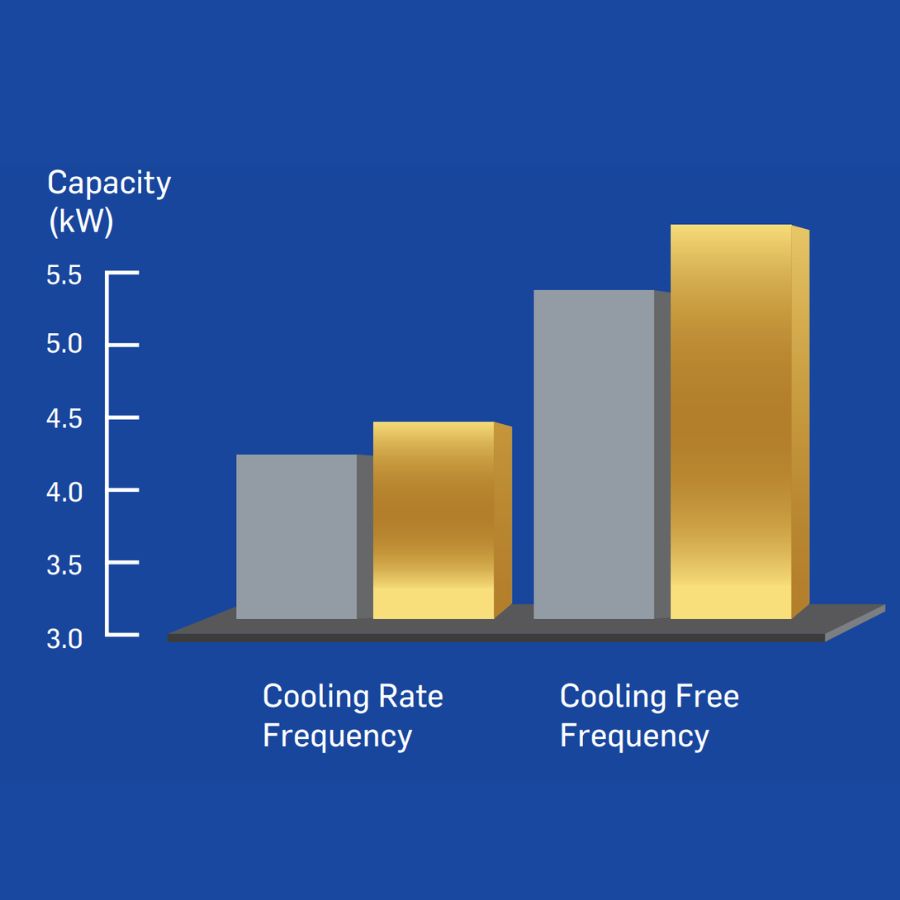
Sticker ratings are measured in mild conditions, and heating capacity drops as the outdoor temperature drops. Mitsubishi Electric’s sizing guidance shows the trap. A unit rated at 5.6kW might deliver about 4.76kW at 0°C. If your room needs 5.6kW on a frosty morning, that unit falls short exactly when you need it most.
The fix is to size from the H2 rating, which measures output at 2°C. In the example above, a 6.8kW unit still delivers about 5.78kW at 0°C, so it’s the right pick for that room even though it looks oversized on paper.
This matters most in the South Island, inland towns, and anywhere ground frost turns up regularly. If that sounds like your winters, our Palmerston North heat pump guide [Link to blog] covers choosing and pricing a unit for exactly that kind of cold.
When One Heat Pump Isn’t Enough
A single high wall unit heats the room it’s in, not the whole house. Once you’re heating three or more rooms, two options beat hanging a wall unit in every one.
A multi-split runs several indoor units off one outdoor unit. Rooms don’t all peak at the same time, so a single 10kW outdoor unit can run a five-room setup: a larger unit in the lounge and kitchen, and smaller ones in each bedroom.
A ducted system hides in the ceiling and pushes warm air to vents in every room. Ducted units carry a higher kW than high wall units because they’re doing the whole home’s work. Sizing one means a heat loss calculation across the entire house, so this is where a proper site visit stops being optional.
Heat Pump Sizing FAQs
What size heat pump do I need for my home?
Start with room volume: length x width x ceiling height, multiplied by 55 watts for an average NZ home. A standard bedroom needs around 2.5-3kW and a 40m² living room needs 4-5kW. Use 65 watts per cubic metre instead if your home is cold or poorly insulated.
What size room will a 6kW heat pump heat?
A 6kW heat pump can heat or cool a large open-plan living area of 27-40 m², provided the ceiling is insulated and no higher than 2.6 metres. In a colder region or a poorly insulated home, expect it to handle the smaller end of that range.
Can I just use a rule of thumb like 1kW per 10m²?
It’s a rough starting point, nothing more. Simple per-square-metre rules skip ceiling height, insulation, window size, and how cold your area gets, and those swing the answer by a full size step. Use the volume formula for a shortlist, then get an in-home assessment to confirm.
What happens if my heat pump is too big?
An oversized unit short-cycles: it switches on and off constantly instead of running steadily. That wastes energy, wears the compressor, and never gives the unit long enough to dehumidify the air, so rooms feel clammy. You also pay more upfront for capacity you never use.
Do I need a bigger heat pump in the South Island?
Usually, yes. Add 10-15% to the kW the standard formula gives you, and size from the H2 rating, which shows output at 2°C rather than in mild test conditions. A unit one size up will still put out the heat you need on frosty mornings.
Verdict on Heat Pump Sizing
The answer to “what size heat pump do I need” starts with a tape measure, not a brochure. Work out your room volume, multiply by the right watts figure for your home’s insulation, and treat the result as your shortlist number. Then size for winter: check the H2 rating, and step up a size in colder regions rather than trusting the sticker kW.
Before you sign anything, get a free in-home assessment from at least two installers and ask each to show their sizing maths. The right kW number keeps both your power bill and your purchase price honest.